Lab researchAt the bench
Moving liquids with sound
Huang Acoustofluidics Laboratory, Duke University · Summers 2025 and 2026
Eight projects between the bench and the market
Bench experiments, devices, measurementsMarket prices, sourcing, portfolios
Acoustofluidics uses sound waves to move liquids and particles inside chips whose channels are measured in micrometers. The Huang lab builds sensing and diagnostic tools around it: detecting molecules, reading a colorectal-cancer liquid biopsy through DNA methylation, and barcoding single cells for sequencing.
I spent two summers there, working across three of those projects.
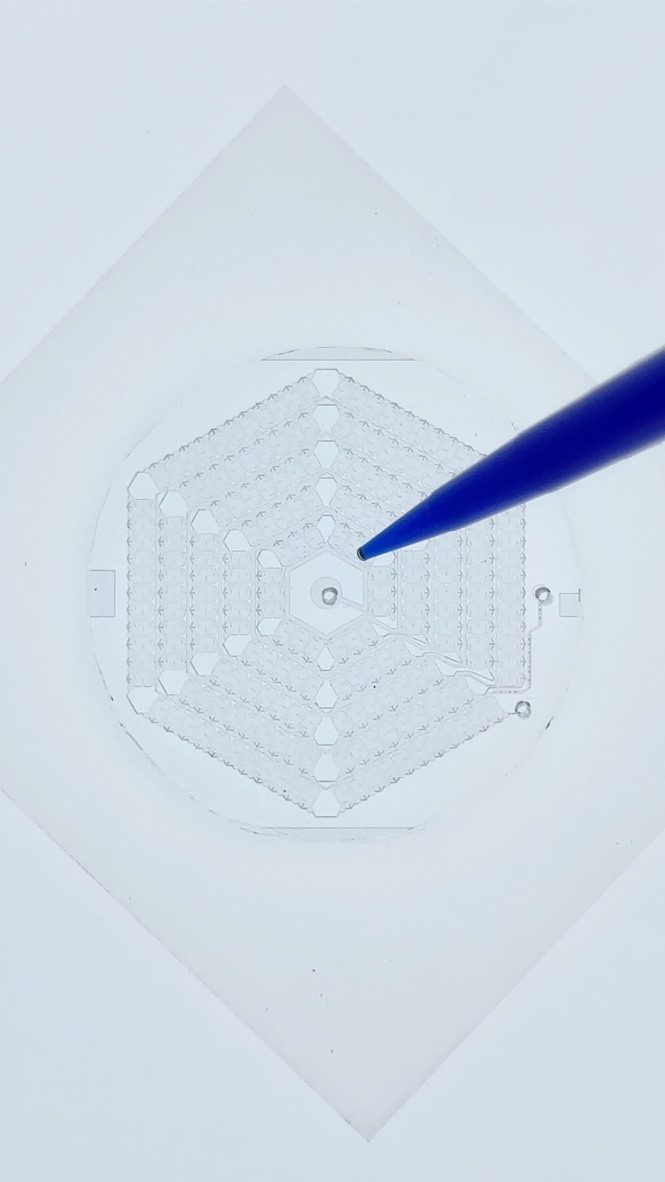
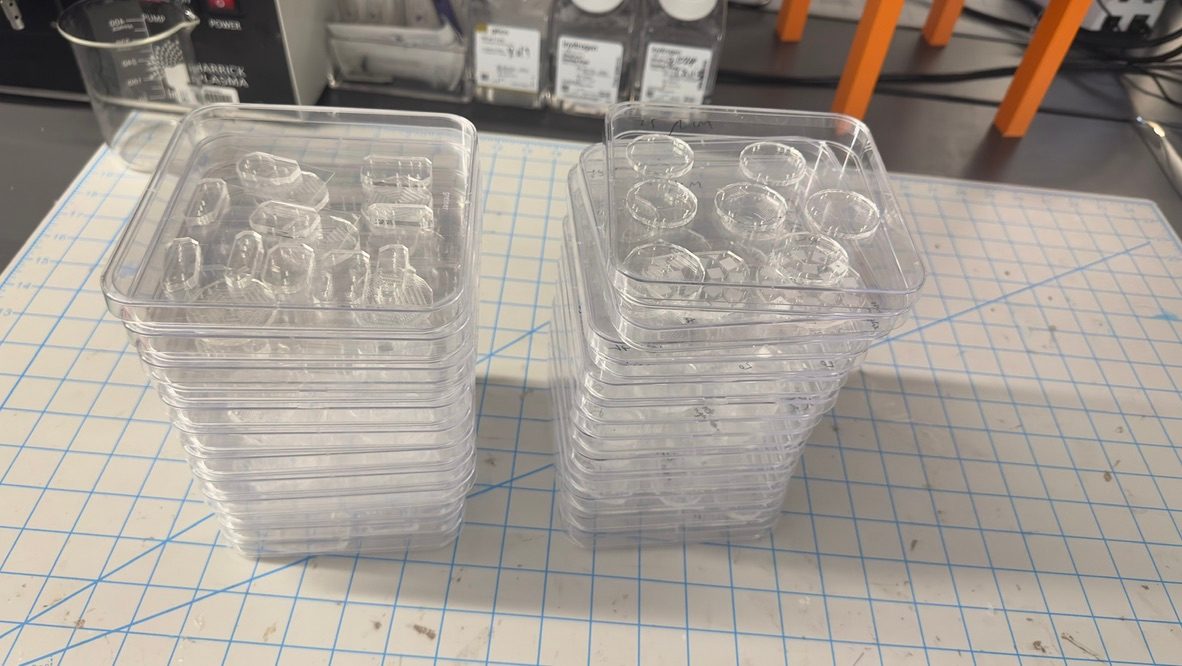
The lab’s three projects
- Acoustic reaction circuits for molecular sensing: molecular sensing on a chip, with sound used to speed up transport to the sensing surface.
- A digital acoustofluidic platform for colorectal-cancer liquid biopsy, paired with machine learning on DNA-methylation data.
- Droplet acoustofluidics for barcoding single cells ahead of high-throughput sequencing.
- The lab reports a readout in 15–20 minutes and a sensitivity of 0.3 copies/µL for its sensing platform. These are laboratory figures, not a clinical validation.
What I did
- Fabricated the PDMS devices: more than 500 chips and over 10 wafer molds.
- Tested them under the optical microscope, simulated acoustic streaming in COMSOL, and analyzed reaction-efficiency and detection data in Origin.
- For the liquid-biopsy project, built a methylation matrix of roughly 5,000 × 20,000 and implemented the machine-learning analysis on it.
- Analyzed the sensing platform’s diagnostic performance for my own science-fair poster on respiratory diagnostics, which draws on a subset of this work.
- Took part in the single-cell sequencing project.